
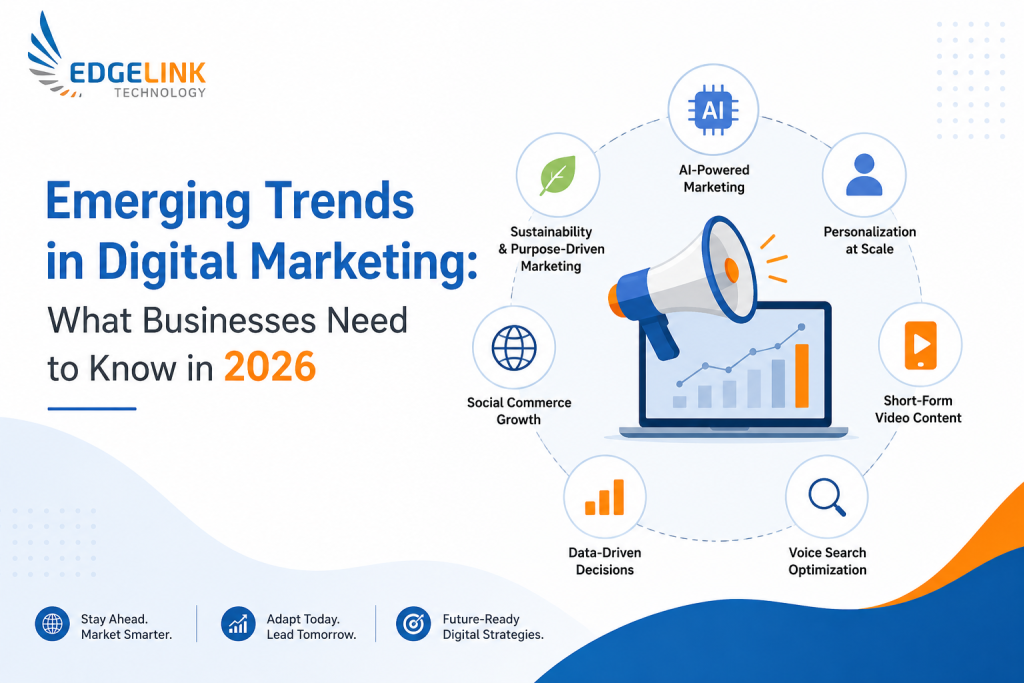
Digital marketing keeps changing every year, and 2026 has brought some of the biggest shifts we have seen in a while. Search behaviour is changing, social platforms are rewarding different types of content, and local businesses are competing in ways that did not even exist two years ago. If you run a business and want to stay visible online, understanding these trends is no longer optional.
This blog covers the emerging trends across four core areas of digital marketing with help of the agency in pune : website performance, search engine optimisation, local business listings, and social media. Each of these areas works together, and businesses that treat them as one connected strategy are the ones pulling ahead.
Why Digital Marketing Trends Matter More Than Ever
A few years ago, businesses could get away with a basic website and occasional social posts. That approach does not work anymore. Customers research a business across multiple touchpoints before they make a decision. They check your website, read your reviews, look at your social media activity, and often ask AI powered search tools for recommendations before picking up the phone.
This means your digital presence needs to be consistent, fast, and genuinely useful across every platform. Businesses that ignore this shift are losing customers to competitors who show up everywhere their audience is looking.
Website Trends Shaping 2026
1. Speed and Core Web Vitals Are Non-Negotiable
Website speed has always mattered, but it matters even more now. Search engines and users both penalise slow websites. A site that takes more than three seconds to load loses a large share of visitors before the page even finishes rendering.
Businesses are now investing in modern frameworks, optimised images, and lightweight code to keep their websites fast on both desktop and mobile. Core Web Vitals, which measure loading speed, interactivity, and visual stability, have become a standard benchmark that agencies track for every client website.
2. Mobile-First Design Is the Default
More than half of all website traffic today comes from mobile devices. A website that looks good on a laptop but breaks on a phone is losing business every single day. Mobile-first design is no longer a trend, it is the baseline expectation.
This includes larger tap targets, simplified navigation, and content that reads well on smaller screens without excessive scrolling or zooming.
3. AI-Assisted Personalisation
Websites are getting smarter about showing the right content to the right visitor. AI tools now help businesses personalise landing pages based on visitor location, past behaviour, and even the device being used. A returning visitor might see different messaging than a first-time visitor, which improves engagement and conversion rates.
4. Conversion-Focused Design
Businesses are moving away from generic templates and focusing on design that actually drives action. This means clear calls to action, trust signals like testimonials and certifications placed strategically, and forms that are short and easy to fill. A beautiful website that does not convert visitors into leads is not doing its job.
SEO Trends That Are Changing the Game
1. Search Is Becoming More Conversational
People are typing longer, more natural questions into search bars instead of short keyword phrases. This shift means businesses need content written in a conversational tone that directly answers common customer questions, rather than content stuffed with short keywords.
2. Answer Engine Optimisation Is on the Rise
AI powered chat tools and answer engines are increasingly used for research and recommendations. Businesses now need their content structured in a way that these tools can easily read, summarise, and cite. This means clear headings, direct answers near the top of a page, and content backed by real expertise and data.
Structured content, FAQ sections, and well-organised information architecture all help improve how businesses appear across these AI powered answer tools, not just traditional search results pages.
3. E-E-A-T Signals Matter More
Experience, expertise, authoritativeness, and trustworthiness continue to be a major ranking factor. Businesses that publish genuinely useful content written by real experts, backed by author bios, credentials, and case studies, are seeing stronger and more stable rankings compared to businesses publishing generic, thin content.
4. Video and Visual Content in Search Results
Search results increasingly show video previews, images, and rich snippets alongside traditional text results. Businesses that create supporting video content and optimise their images with proper alt text and file names get more visibility across these varied result formats.
5. Technical SEO Remains the Foundation
No amount of great content helps if the website has broken links, missing schema markup, or crawlability issues. Technical SEO audits, proper structured data implementation, and clean site architecture continue to be the backbone of any strong SEO strategy.
Local Business Listings and GMB Trends
1. Business Profile Optimisation Is a Priority
For local businesses, an optimised business profile listing is one of the strongest tools available. Complete business information, accurate categories, high-quality photos, and regular posts all influence how often a business appears in local search results and map packs.
Businesses that update their profile weekly with fresh posts, offers, and photos consistently outperform businesses that set up their listing once and never touch it again.
2. Reviews Are a Ranking and Trust Signal
Customer reviews continue to carry significant weight, both for building trust with potential customers and for local search ranking. Businesses are now investing in structured review generation systems that make it easy for happy customers to leave feedback, and just as importantly, responding to every review, positive or negative, in a professional and timely manner.
3. Local Content and Geo-Targeted Pages
Businesses with multiple locations are creating dedicated pages for each city or neighbourhood they serve. This helps them show up for location-specific searches and gives potential customers location-relevant information like directions, local phone numbers, and area-specific service details.
4. Citations and Local Directory Consistency
Keeping business name, address, and phone number consistent across every directory and citation source remains an important trust signal. Inconsistent information across different platforms confuses both customers and search algorithms, which can hurt local visibility.
Social Media Trends Businesses Cannot Ignore
1. Short-Form Video Continues to Dominate
Short-form video remains one of the most effective ways to reach new audiences across nearly every social platform. Businesses that consistently post short, engaging videos, whether it is behind-the-scenes content, customer testimonials, or educational tips, see significantly higher reach compared to static image posts.
2. Authentic Content Over Polished Production
Audiences are responding better to raw, authentic content over heavily produced advertisements. Content that feels like it comes from a real person, showing genuine moments, honest opinions, and relatable situations, tends to perform better than overly scripted marketing content.
3. Social Commerce Is Growing Fast
Buying directly through social platforms is becoming a normal part of the customer journey. Businesses are setting up shoppable posts, integrated checkout options, and product catalogues directly within their social profiles, reducing the friction between discovery and purchase.
4. AI-Powered Community Management
Businesses are using AI tools to manage direct messages, comments, and customer queries faster than ever. Automated first responses, smart routing to the right team member, and round-the-clock availability are becoming standard expectations from customers reaching out on social platforms.
5. Influencer and Micro-Creator Partnerships
Rather than working with large celebrity influencers, businesses are finding better returns by partnering with micro-creators who have smaller but highly engaged and niche-specific audiences. These partnerships often feel more authentic and drive better conversion rates for local and regional businesses.
Know more the social media markting service in pune
Paid Advertising Trends Worth Watching
1. Smarter, AI-Driven Bidding
Paid advertising platforms are relying more heavily on AI-driven bidding strategies that adjust in real time based on user behaviour, conversion likelihood, and budget pacing. Businesses that hand over more control to these smart bidding systems, while feeding them clean conversion data, tend to see better cost efficiency than those still relying purely on manual bid adjustments.
2. First-Party Data Is Becoming Essential
With increasing privacy restrictions and the phasing out of third-party tracking methods, businesses are shifting focus toward building their own first-party data through email lists, loyalty programmes, and direct customer relationships. This data is proving far more reliable for targeting and retargeting campaigns than relying solely on platform-provided audience data.
3. Creative Testing at Scale
Ad platforms now reward businesses that test multiple creative variations quickly. Running several headline, image, and video combinations at once, then letting performance data guide the winning combination, has become standard practice rather than an advanced tactic reserved for large brands.
Marketing Automation and Email Trends
1. Behaviour-Triggered Email Sequences
Generic email blasts sent to an entire list are being replaced by behaviour-triggered sequences. A visitor who abandons a form, browses a specific service page, or downloads a resource now receives a tailored follow-up email based on that specific action, which significantly improves open and response rates.
2. WhatsApp and Messaging Apps as Marketing Channels
Businesses, especially in India, are increasingly using WhatsApp for appointment reminders, order updates, and customer support. This channel often sees far higher open rates than traditional email, making it an important addition to any local business marketing stack.
3. CRM and Marketing Alignment
Sales and marketing teams are working from shared CRM systems more than ever, which means leads generated from ads, website forms, and social media all flow into one place. This alignment reduces lost leads and gives businesses a clearer picture of which channels are actually driving revenue, not just traffic.
Bringing It All Together: An Integrated Digital Strategy
The biggest trend across all of these areas is integration. A business cannot treat its website, SEO, local listings, and social media as separate projects anymore. Customers move fluidly between platforms, and businesses need a consistent brand voice, message, and visual identity everywhere they show up.
For example, a well-optimised business profile drives traffic to a fast, mobile-friendly website. That website ranks well because of solid technical SEO and expert-backed content. Social media content drives awareness and directs followers back to both the website and the business profile. Each piece supports the others, and businesses that plan their digital marketing this way see far stronger results than businesses running disconnected campaigns.
How Edgelink Technology Helps Businesses Stay Ahead
Keeping up with all these moving parts takes time, expertise, and the right systems in place. This is exactly where a dedicated digital marketing partner makes the difference. At Edgelink Technology, our teams handle website development, SEO, local business listing management, and social media together, so every part of your digital presence works toward the same goal.
We work with businesses across healthcare, real estate, education, and local services, building strategies that are tailored to how their specific customers search and make decisions. Instead of generic packages, our approach starts with understanding your business and building a digital marketing plan around it.
If you want your business to stay ahead of these trends instead of catching up to them later, get in touch with us at Edgelink Technology and let our team build a digital marketing strategy that keeps you visible across search, local listings, and social media.
Edgelink Technology is Best Digital Marketing Agency in Pune
Digital marketing in 2026 rewards businesses that think beyond a single channel. A fast, well-designed website, strong SEO fundamentals, an actively managed business profile, and consistent social media presence all work together to build trust and visibility with today’s customers.
Staying on top of these trends does not mean chasing every new tool or platform update. It means building a solid foundation across your website, search visibility, local presence, and social channels, and refining it consistently over time. Businesses that commit to this integrated approach are the ones that will keep growing, no matter how the digital landscape continues to change.
Ready to build a digital marketing strategy that covers your website, SEO, local listings, and social media all in one place?
Contact Edgelink Technology today.

Sharad Mishra
Sharad Mishra is the Director of EdgeLink Technology, a leading digital marketing agency based in Pune. With over 8 years of experience in digital marketing, SEO, Google Business Profile optimization, website development, and performance marketing, he has helped 600+ businesses strengthen their online presence and generate measurable growth. Sharad specializes in healthcare marketing, local SEO, and lead generation strategies, helping brands achieve sustainable digital success.